ELLIS Summer School 2026: AI for Research
Harnessing fundamental and applied AI to advance scientific discovery.

As a scientist, the next project deadline is usually much more pressing than taking a step back and thinking about how we actually work. As a result, the way we do research rarely gets questioned or streamlined. The summer school was a welcome exception to that. One talk that particularly stood out to me was by Peter Clark from the Allen Institute for AI, who showed how AI can become a genuine part of the research process. Not just as a writing tool, but as a system that can search the literature, bring information together, and support claims with evidence, while also being evaluated on how well it does these things. I found this perspective particularly interesting because it presented AI neither as a magic solution nor as something to be avoided, but as a research assistant with clear strengths and limitations.
Alongside the talks, we had hands-on workshops on topics that are directly relevant to my work, including conformal prediction and Bayesian experimental design. These were particularly valuable because they introduced methods that I can actually see myself using in future projects. There were also several talks on how AI is being applied in different fields. Since I work with medical data myself, I was especially interested in Nassir Navab's talk on using AI to support surgeons during difficult procedures. It was a good reminder that solving a problem technically is only part of the challenge. Especially in a setting like surgery, a system also needs to be useful and trustworthy enough that practitioners are willing to rely on it. Accuracy alone is not necessarily enough, and I found that perspective particularly relevant to my own work.

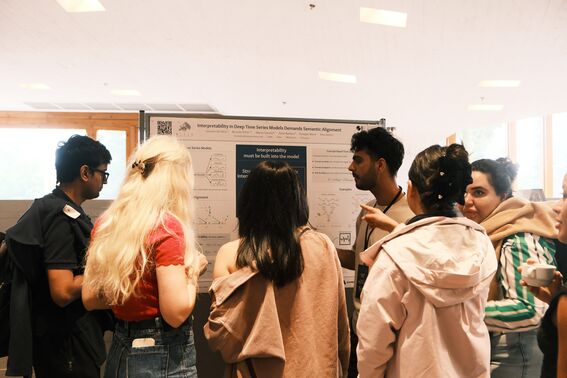

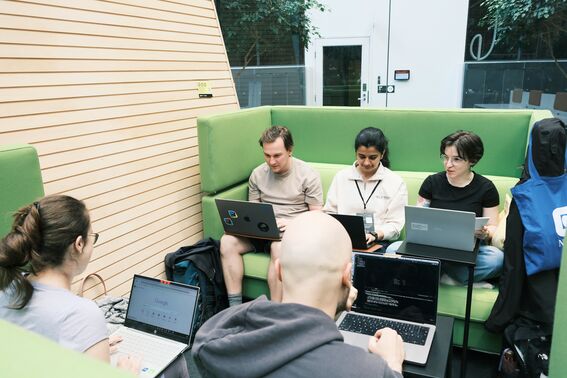

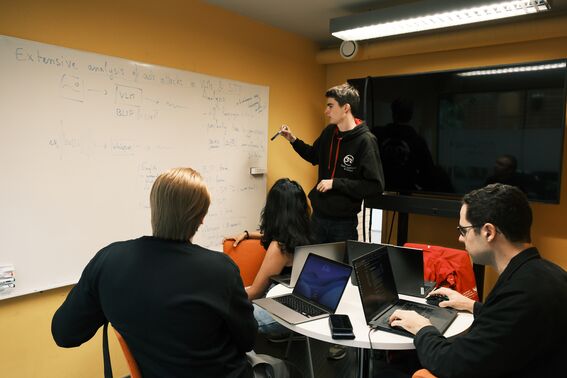
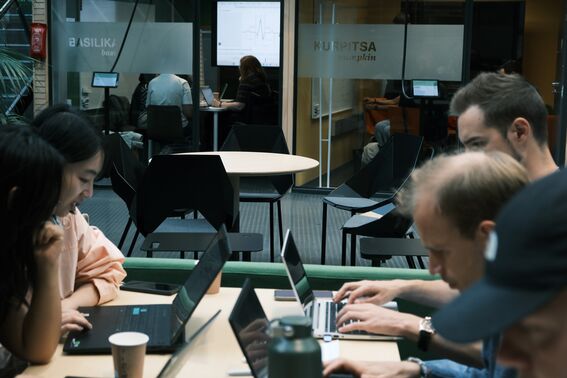
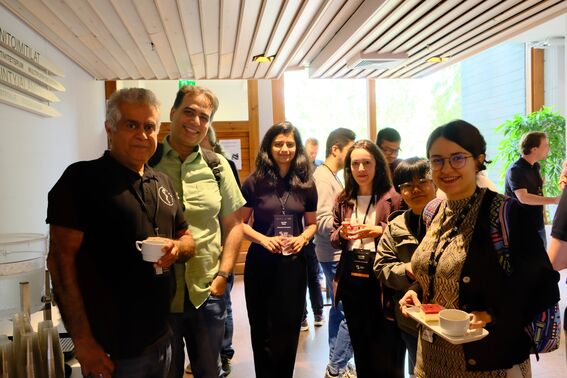

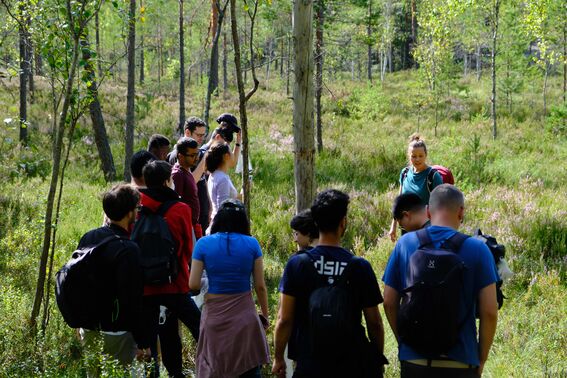

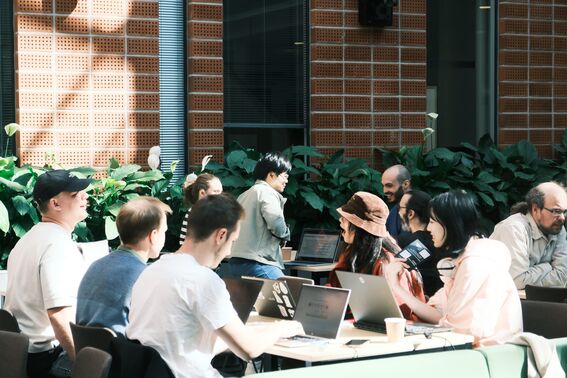

Beyond the talks, we also had the opportunity to build our own tools for AI-assisted research and present them as part of a hackathon. Working in an interdisciplinary and international group was a great experience, but I also really enjoyed seeing what the other teams came up with. The different projects gave a surprisingly good picture of the kinds of problems researchers currently run into in their day-to-day work. Some teams built AI agents that tried to simulate aspects of scientific discovery, with one system trying to develop safety mechanisms while another tried to find ways around them. Others focused on much more practical problems, such as finding suitable publication venues for a paper or helping researchers learn how to conduct a good peer review. Seeing such different approaches was interesting in itself but also made it clear how many small parts of the research process could potentially be improved with the right tools.
Overall, I found the summer school extremely useful. The talks and workshops gave me several new methods and, perhaps more importantly, a better idea of where AI can genuinely help with research and where its limitations still are. At the same time, I enjoyed the opportunity to meet other researchers, compare how we approach our work, and hear about projects that are quite different from my own. I came away with new ideas for my own research, a few methods I want to try, and several people I hope to stay in touch, and potentially collaborate with, in the future.

Harnessing fundamental and applied AI to advance scientific discovery.

Seminars, meetings, workshops and other events at ELLIS Institute Finland